When Is the Next Aramco Dividend Distribution? A Complete Investor Guide
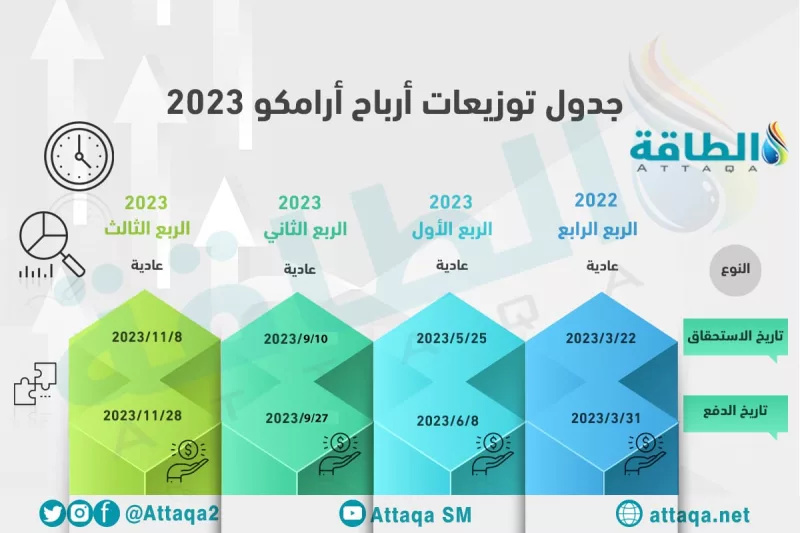
The question of Aramco dividend distribution is one of the most common topics among investors in the Saudi stock market.
Saudi Aramco represents a core holding in many investment portfolios, and its consistent dividend policy makes the Aramco dividend distribution a key factor in long-term financial planning.
Saudi Aramco follows a quarterly dividend distribution system, providing shareholders with four cash payments each year.
This structure ensures stable cash flow and offers clarity for income-focused investors, reinforcing the appeal of the Aramco dividend distribution compared with many other listed companies.
The company’s dividend policy is divided into two main components.
The first is the regular dividend, which represents a minimum guaranteed payout regardless of oil price fluctuations.
The second component is the performance-linked dividend, which depends on the level of free cash flow generated during specific financial periods.
Based on historical patterns, Aramco announces its dividend distributions shortly after releasing quarterly financial results.
The ex-dividend date typically follows the announcement, while the payment date usually occurs within 10 to 15 business days, making it essential for investors to monitor official Tadawul disclosures.
Understanding the difference between the ex-dividend date and the payment date is crucial.
The former determines shareholder eligibility, while the latter marks when cash dividends are credited to investor accounts.
This distinction often influences short-term trading decisions.
From a sustainability perspective, recent financial results indicate that Aramco maintains strong capacity to support its dividends, backed by robust free cash flow and low debt levels.
Linking part of the payouts to performance adds flexibility and long-term resilience to the dividend policy.
To maximize returns, investors are advised to adopt a long-term approach, reinvest cash dividends, closely track eligibility dates, and diversify their portfolios to manage risk effectively.